LeadLinx in Action
Not a mockup, not a demo account staged for screenshots. This page shows a real search from start to finish, real (pseudonymous) leads it flagged, and the platform’s actual live numbers — pulled the same way your own dashboard stats are.
The platform, right now
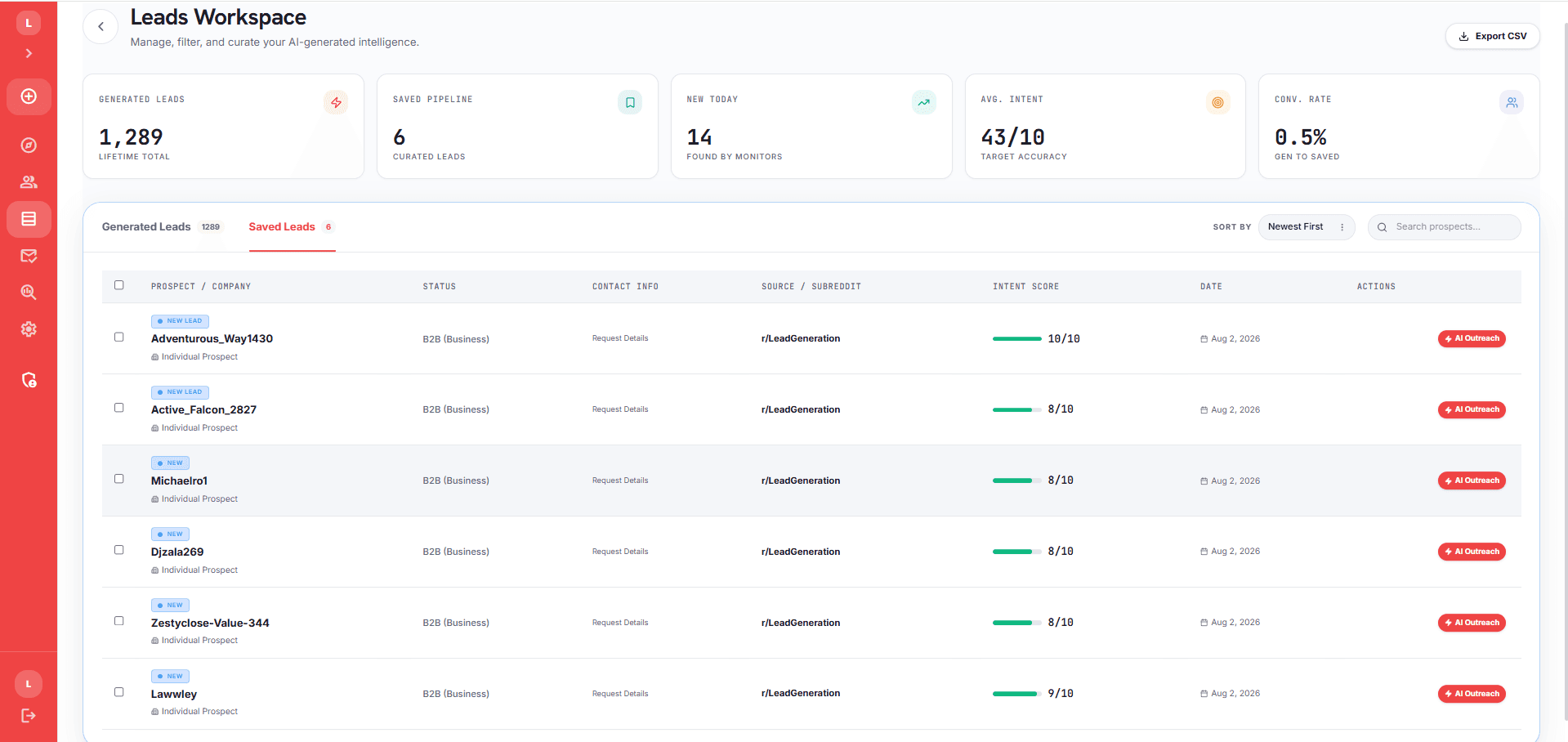
Computed live from the production database at request time. No rounding up, no vanity metrics.
That conversion rate looks low on purpose: LeadLinx surfaces everything above your intent threshold, and only a fraction of what it surfaces is worth saving to a pipeline. A high save rate would mean the filter wasn’t filtering for much.
A real search, start to finish
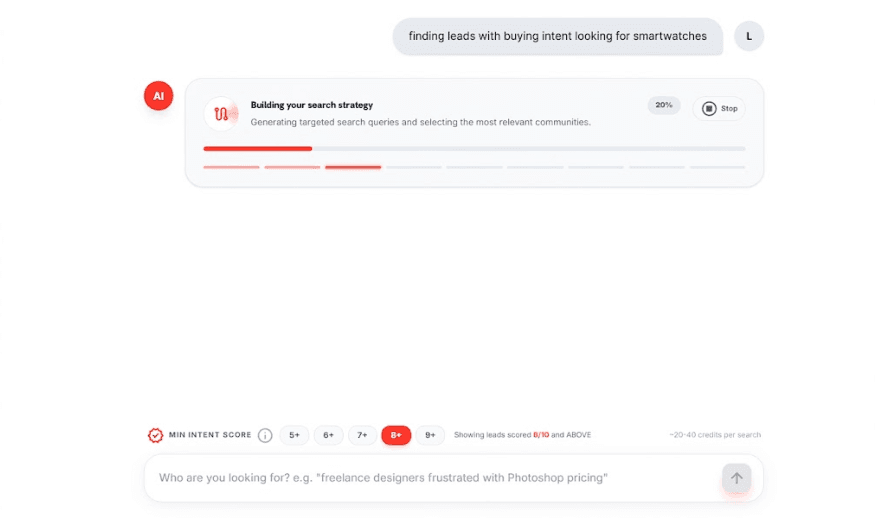
The screenshot below is the actual in-progress state of a real search — the query was “finding leads with buying intent looking for smartwatches.” Here’s what it found.
“Which smartwatch to buy, under 5k rs, priority is fitness and sleep”
Why this was flagged: Explicitly asks for a smartwatch to buy now with budget and priority, indicating active purchase intent.
“Recommend me a smartwatch that measures blood pressure”
Why this was flagged: Explicitly asking for a recommendation now with a budget mention and dissatisfaction with a current app.
What people actually search for
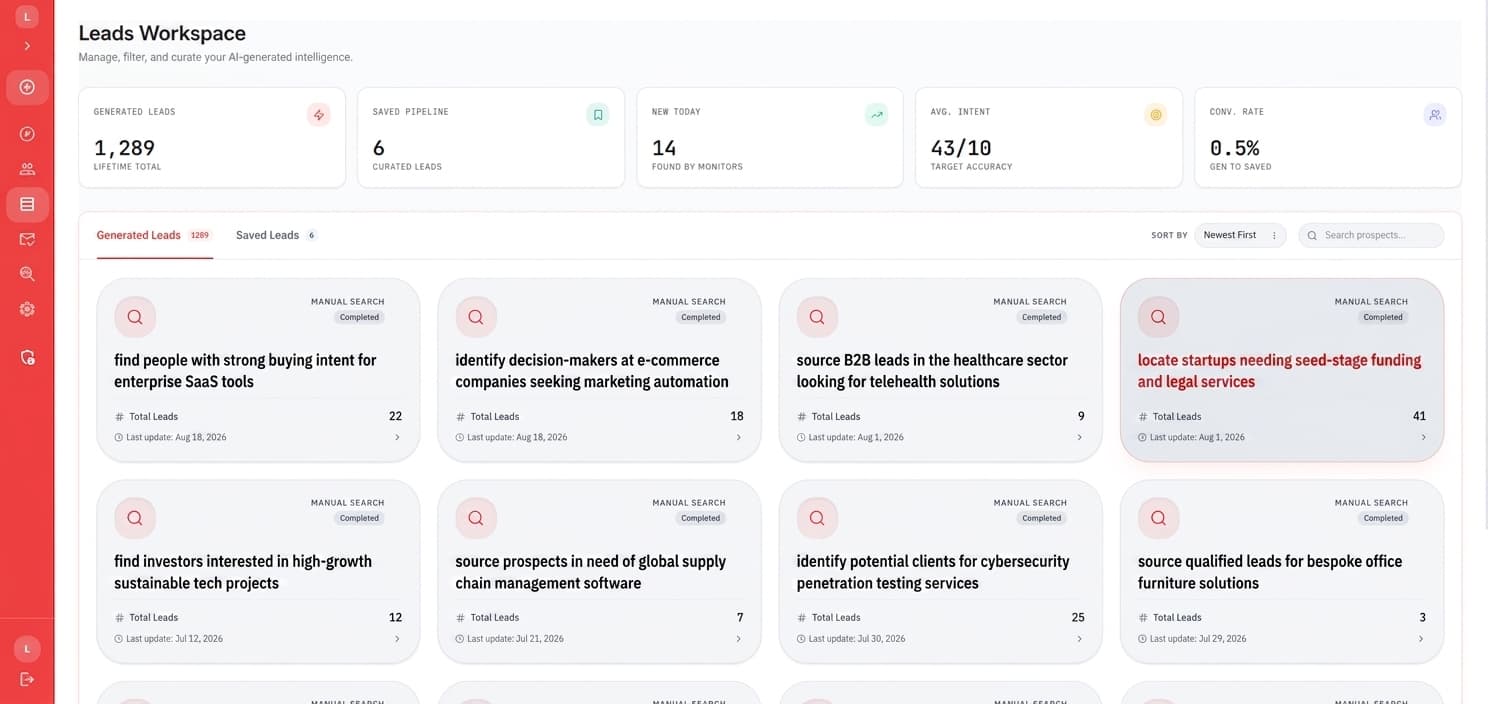
A sample of real search queries run on LeadLinx, and the real number of leads each one returned.
From a flagged post to a tracked pipeline
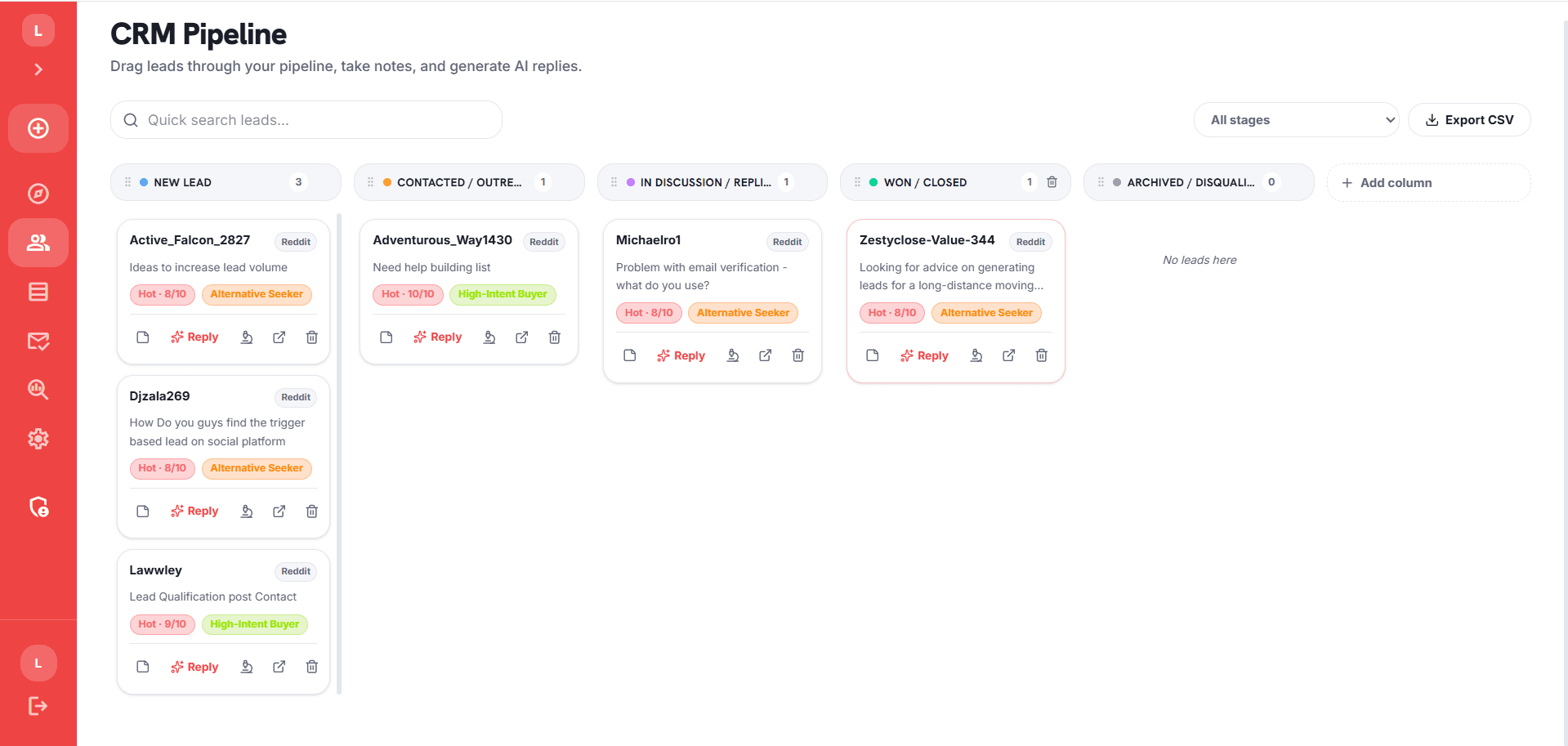
A save moves a lead into the CRM Pipeline — a real, active board, not a staged one.
Deeper intelligence on any lead
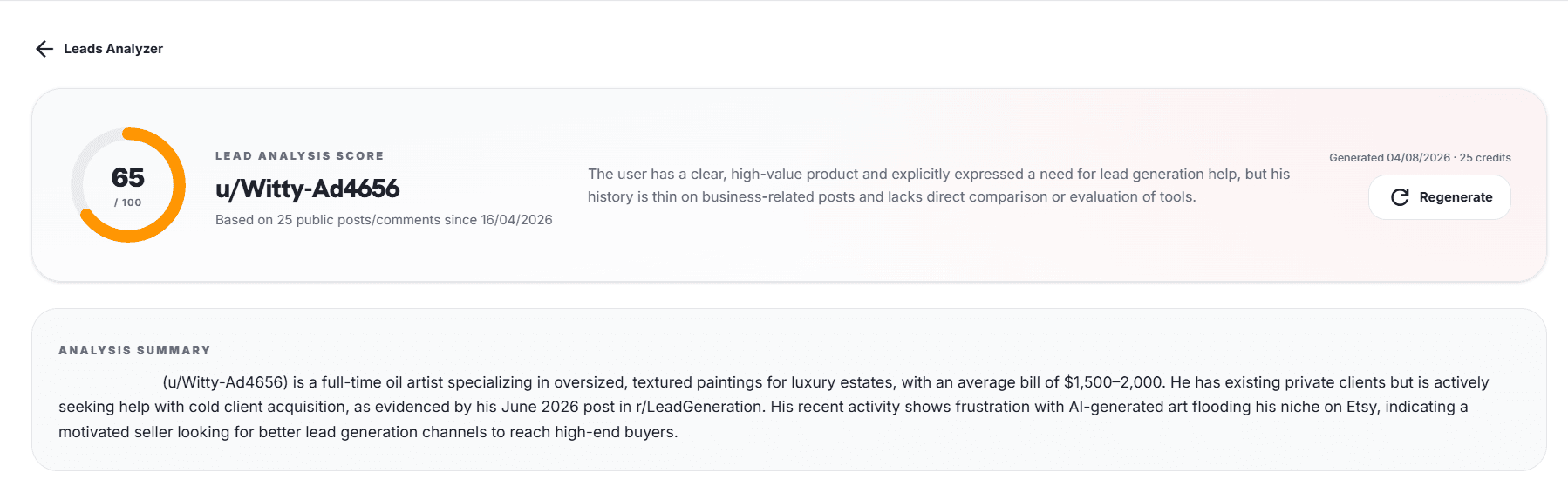
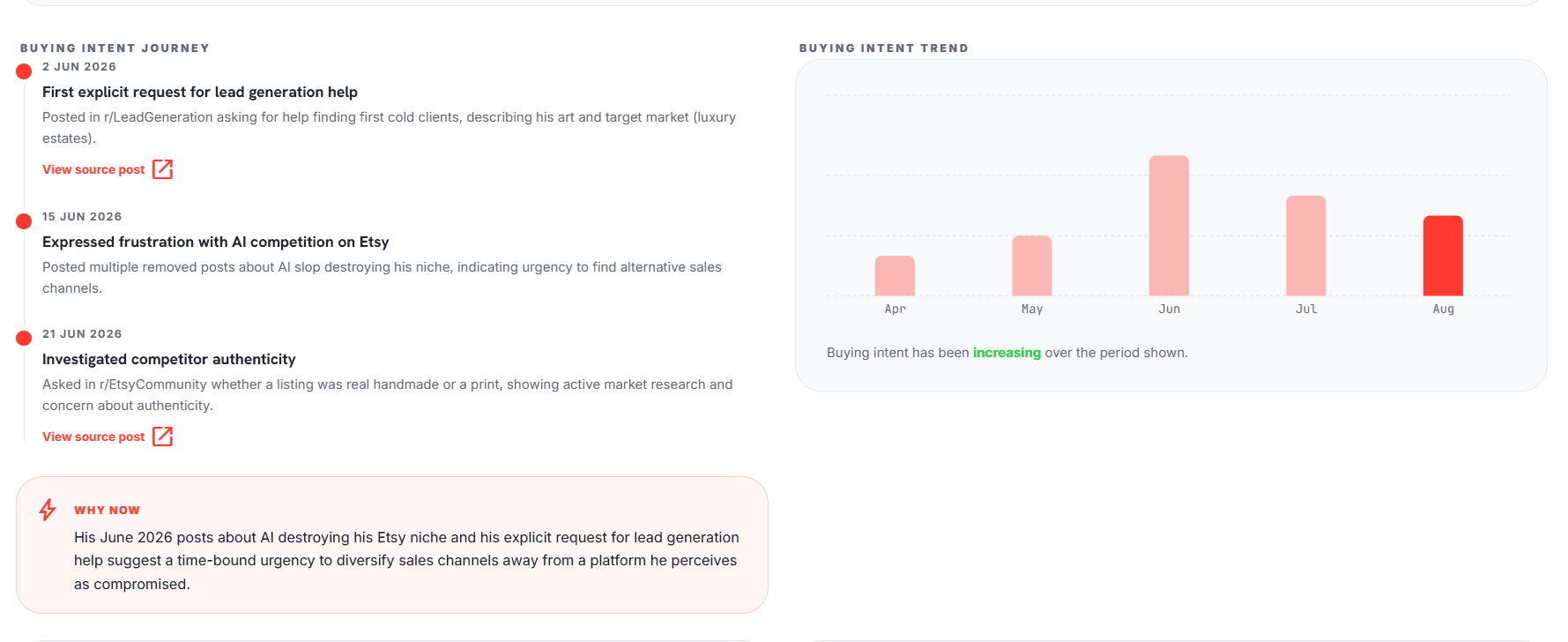
The Leads Analyzerbuilds a full profile from someone’s public post history — a real example below, with the username shown as-is and any inferred personal name removed.

AI-drafted replies, always human-sent
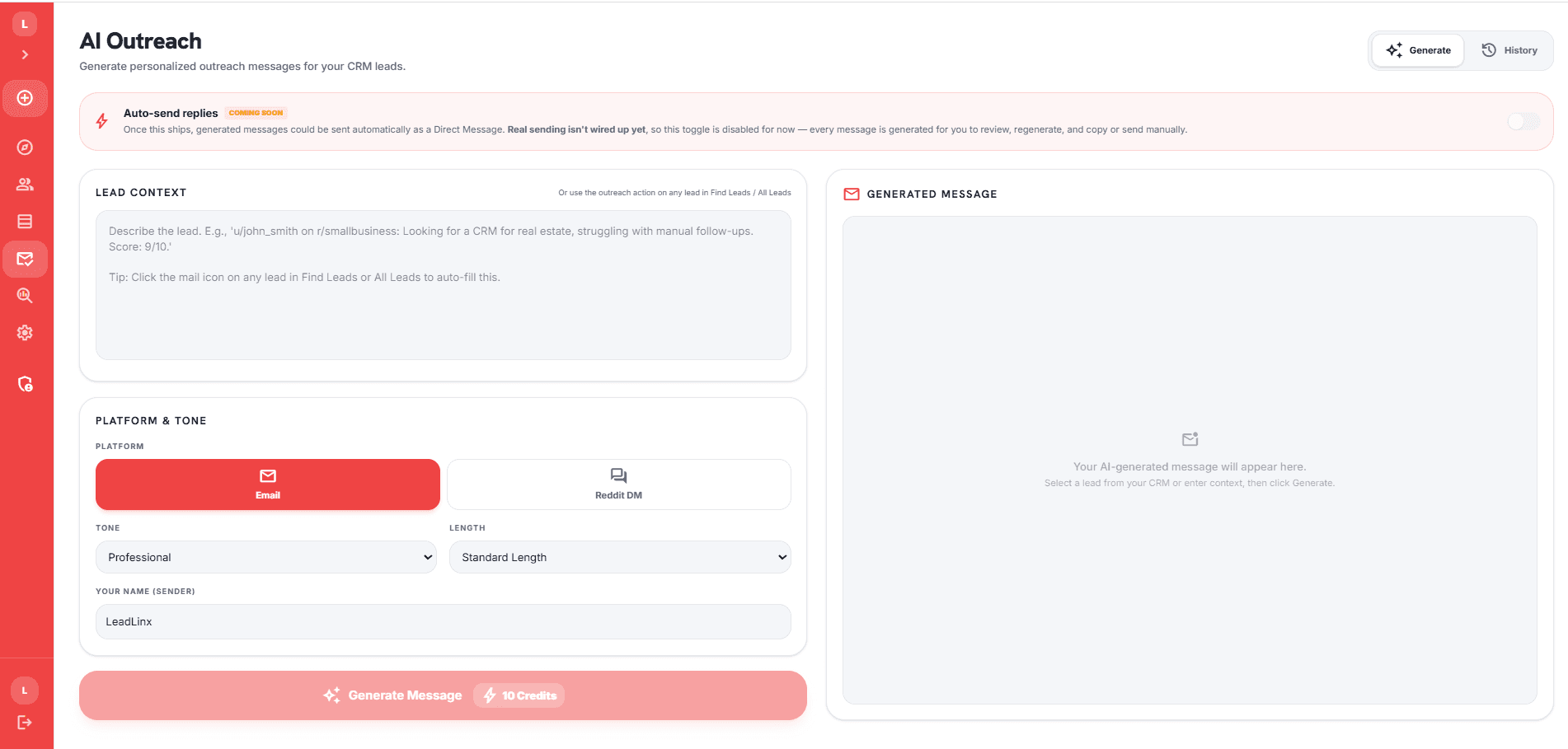
AI Outreachdrafts a message using a lead’s actual post as context. Sending or posting it is always a manual action — there is no auto-send today, shown honestly below rather than implied otherwise.
Not a contact database
Tools like Apollo start from a static, purchased database of companies and contacts and let you filter it down. LeadLinx starts from nothing and finds people in the act of expressing a real, current need — the posts above are real people, asking real questions, in public, right now. That’s a different kind of signal than a record sitting in a list, and it’s the reason the examples on this page are screenshots of the real product instead of a description of one. See the full LeadLinx vs. Apollo comparison for more.
Questions about this page
Is this page showing real data, or example/demo content?
The platform numbers (leads generated, saved, found today, average intent score, conversion rate) are computed live from the actual production database, the same way the numbers inside your own dashboard are computed — just aggregated across every account instead of one. The screenshots and lead examples below are real product output from a real search, not mockups.
Why is the save-to-pipeline conversion rate so low?
Because the intent-score filter is deliberately strict. LeadLinx surfaces every post above your chosen score threshold, and only a fraction of those are ever worth saving to a pipeline — that's the filter working as intended, not a low-quality result. A tool that saved everything it found wouldn't be filtering for intent at all.
Are the usernames on this page real?
Yes — they're real, public Reddit handles LeadLinx genuinely surfaced, shown with their own already-public post text. No names, employers, or other identifying details beyond what the person themselves posted publicly are shown.
How is this different from a contact database like Apollo?
Apollo-style tools start from a static database of companies and contacts and let you filter it. LeadLinx starts from nothing and finds people in the middle of expressing a real, current need in public — the difference on this page is real posts from real people asking real questions, not records pulled from a purchased list.
Run your own search
See what LeadLinx finds for your own market — free to start.